
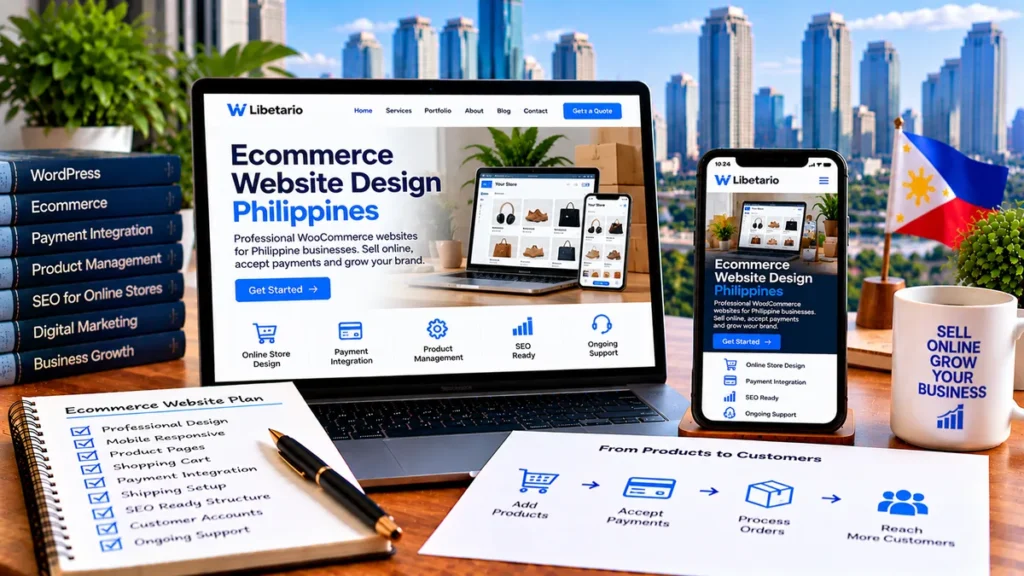
Selling online in the Philippines no longer means relying only on Facebook, Shopee, Lazada or other marketplaces.
These platforms can be valuable sales channels, but businesses can also build their own ecommerce website where they control their brand, products, customer experience and website content.
Professional ecommerce website design in the Philippines can give businesses an online store built around their specific requirements.
Customers can browse products, add items to their cart, place orders and complete the checkout process directly through the website.
For growing businesses, an ecommerce website can become another important part of their digital sales strategy.
Why Build Your Own Ecommerce Website?
Online marketplaces make it easier to start selling, but your business operates within someone else’s platform.
Your own website gives you greater control over:
Brand presentation
Product categories
Product information
Website design
Customer journey
SEO content
Promotions
Store functionality
The strongest approach doesn’t necessarily mean abandoning marketplaces.
You can use multiple channels together:
Facebook + Marketplace Platforms + Your Own Ecommerce Website
Each can play a different role in your sales strategy.
What Should an Ecommerce Website Include?
A typical online store may need:
Homepage
Product categories
Individual product pages
Shopping cart
Checkout
Payment options
Shipping setup
Customer accounts
Order management
Contact information
The exact functionality depends on the products and how the business operates.
WordPress and WooCommerce
WordPress combined with WooCommerce is one option for building ecommerce websites.
WooCommerce can provide functionality for:
Products
Inventory
Product variations
Categories
Cart
Checkout
Orders
Coupons
Customer accounts
Additional integrations can then be added depending on business requirements.
Product Categories Matter
Imagine a Philippine hardware store selling hundreds of products.
Instead of putting everything on one page, products can be organized into categories such as:
Bathroom Fixtures
Kitchen Fixtures
Electrical Supplies
Plumbing Supplies
Tools
Clear categories make the store easier to navigate and can also provide useful pages for SEO.
Build Better Product Pages
A product page should provide enough information for customers to make a decision.
Depending on the product, include:
Product name
Clear images
Description
Price
Variations
Availability
Specifications
Shipping information
Add to Cart button
Avoid copying extremely short manufacturer descriptions across hundreds of products when useful original information can be provided.
Mobile Ecommerce Is Essential
Your online store needs to work properly on smartphones.
Customers should easily be able to:
Browse products
Search
Select variations
Add to cart
Check prices
Complete checkout
A difficult mobile checkout can cause potential customers to leave before completing an order.
Payment Integration
Payment options depend on the business and the providers available to it.
An ecommerce website may integrate suitable methods such as:
Cards
Bank payment options
E-wallets
Payment gateways
Cash on delivery, where supported by the business model
Before development, determine exactly how customers will pay.
This prevents major changes later.
Shipping and Delivery
Philippine ecommerce businesses also need to consider how orders will reach customers.
Your setup may involve:
Local delivery
Nationwide shipping
Flat-rate shipping
Location-based rates
Free-shipping thresholds
Courier integrations
Shipping rules should reflect the actual operational process.
Ecommerce SEO
Your online store can also target Google searches.
SEO opportunities can include:
Product categories
Product pages
Buying guides
Blog articles
Brand pages
Location-related searches
For example, instead of targeting only:
hardware store
a business could develop useful category pages around searches related to:
bathroom fixtures Philippines
kitchen fixtures Philippines
electrical supplies Philippines
The exact keywords should be selected through research.
Category Pages Can Become SEO Assets
Don’t treat category pages as simple product grids.
A properly optimized category can contain:
Clear heading
Useful introduction
Relevant products
SEO title
Meta description
Internal links
Helpful supporting information
This gives the page more context for customers and search engines.
Content Can Support Ecommerce
An online store can publish useful articles around customer questions.
For example:
How to Choose the Right Bathroom Fixtures
What to Consider When Buying Kitchen Faucets
Essential Electrical Supplies for Home Renovation
These articles can link directly to relevant product categories.
The journey becomes:
Google Search
↓
Helpful Article
↓
Product Category
↓
Product
↓
Checkout
Ecommerce Website Speed
Online stores contain many images.
Large unoptimized product images can make pages unnecessarily heavy.
Optimize images using:
Appropriate dimensions
Compression
Modern formats such as WebP
Also avoid unnecessary plugins and scripts that add little customer value.
Ecommerce Website Security
Online stores should use proper security practices.
Important basics include:
HTTPS
Strong passwords
Regular updates
Backups
Trusted plugins
Controlled administrator access
Payment details should be processed through appropriate secure payment providers rather than handled insecurely by the website.
Can an Ecommerce Website Grow Later?
Yes.
A store might initially launch with:
50 products
Then expand to:
500+ products
Additional functionality could eventually include:
Advanced shipping
Product filters
Customer accounts
Promotions
Custom integrations
Inventory workflows
Plan the foundation according to where the business expects to go.
Ecommerce Website Cost in the Philippines
The cost depends heavily on scope.
Important factors include:
Number of products
Design complexity
Payment integration
Shipping setup
Product variations
Customer accounts
Custom functionality
SEO requirements
A simple online shop and a complex nationwide ecommerce operation shouldn’t be priced as identical projects.
Your Online Store Should Be Part of a Bigger Strategy
Building the ecommerce website is only the beginning.
A stronger system can become:
Ecommerce Website
↓
Product & Category Pages
↓
SEO Content
↓
Google Search
↓
Social Media
↓
Online Advertising
↓
More Product Discovery
↓
Orders
Your website becomes a central sales platform while other marketing channels help send customers toward it.
Frequently Asked Questions
What platform can I use for an ecommerce website in the Philippines?
WordPress with WooCommerce is one option for businesses that want a customizable online store with content and SEO capabilities.
Can customers pay directly through my website?
Payment gateways and supported payment methods can be integrated depending on the business and payment provider.
Can an ecommerce website support nationwide delivery?
Yes. Shipping can be configured according to the business’s delivery methods, rates and courier arrangements.
Is WooCommerce good for SEO?
WooCommerce operates within WordPress and can support SEO-friendly product, category and content structures. Actual search performance still depends on content, competition, technical quality, authority and other factors.
Can I add more products later?
Yes. A properly configured ecommerce store can continue expanding as the business adds products and categories.
Build Your Own Online Store
Marketplaces can remain valuable.
Social media can remain valuable.
But your own ecommerce website gives your business another digital asset built around your brand and your customers.
Libetario has served 200+ clients worldwide since 2017.
We build professional WordPress and WooCommerce websites with mobile-responsive design, product management, payment integration, SEO foundations and room for future business growth.
See your website concept before you commit.